
California Window Replacement Frequently Asked Questions
A lot goes into determining whether it's time to replace your windows. Often, the first signs are visual: fogging between the panes, wood beginning to rot, damaged frames, or older aluminum frames beginning to separate from the surrounding stucco.
Unfortunately, many homeowners don't realize their windows or doors need attention until the problem becomes urgent.
Sometimes it's the first major Southern California rainstorm when water ends up inside the house instead of outside. Other times, it's during a 100-plus-degree heat wave when the air conditioner seems to run constantly and the electric bill is higher than ever.
Other common signs include windows becoming increasingly difficult to open or close, drafts, excessive outside noise, failed seals, condensation between panes, or rooms that are noticeably hotter or colder than the rest of the house.
Not every problem automatically means a window needs to be replaced. A professional evaluation can help determine whether repair makes sense or whether the age, condition, and performance of the existing window make replacement the better long-term investment.
A quality replacement window should realistically serve a homeowner for 25 years or longer.
Quality is one of the biggest factors in how long a window will continue to look and perform as intended. Generally speaking, the less expensive and lower-quality the window, the sooner components may begin to deteriorate.
One of the first failures we often see in lower-quality or aging windows is the insulated glass seal. When that seal fails, the insulating system can become compromised and moisture may eventually develop between the panes, creating the foggy or dirty appearance homeowners often notice.
Lower-quality vinyl can also deteriorate over time. White vinyl may fade, discolor, chalk, or oxidize to the point that a white residue can actually rub off onto your hand.
The window itself is only part of the equation. Proper installation is critical to how well a window performs over its lifetime.
Fogging or condensation between the panes of a dual-pane window is generally an indication that the insulated glass seal has failed.
A dual-pane window isn't simply two pieces of glass. The sealed space between those panes is an important part of the window's insulating system.
Once that seal is compromised, moisture and outside air can enter the space between the panes. That's why homeowners often first notice the problem while cleaning their windows: they clean the inside and outside surfaces but the window still looks dirty or cloudy.
More than half of the homeowners we meet who have older dual-pane windows mention some degree of fogging, condensation, or failed glass.
Difficulty operating older windows is one of the most common complaints we hear from homeowners.
Age, worn components, frame deterioration, shifting, damaged rollers or balances, and other issues can make windows progressively harder to operate.
A window should not require a workout to open or close.
Beyond being frustrating, difficult operation can become a safety and accessibility issue, particularly with windows that may need to provide ventilation or emergency egress.
There is no responsible way to give every homeowner one price per window because window size, configuration, glass, color, installation requirements, product selection, and project conditions can dramatically affect the cost.
The cost of raw materials, fuel, labor, energy, and inflation has also substantially increased window and door replacement costs over the years.
As a realistic planning range, Legendary commonly sees a project consisting of approximately 10 replacement windows and one sliding patio door fall between roughly $25,000 and $45,000.
That range can move significantly depending on the home and selections.
Factors affecting price include:
- Window size and quantity
- Window style and configuration
- Vinyl, fiberglass, or other frame materials
- Glass and energy-efficiency packages
- Exterior and interior colors
- Retrofit versus new-construction installation
- Existing opening conditions
- Second-story or difficult access
- Patio and entry doors
- Structural changes
- Permitting requirements
- Installation complexity
We recommend comparing complete project scopes rather than simply comparing a quoted “price per window.”
Whenever practical, we generally recommend replacing all of the windows and doors included in a homeowner's long-term plan at the same time.
With material and labor costs continuing to change, there is often little financial incentive to postpone work that a homeowner already knows they will eventually complete.
Completing the project at once can also provide consistency in product, glass, frame color, sightlines, appearance, and performance throughout the home.
It also means going through installation once rather than repeatedly disrupting the home as individual phases are completed.
That doesn't mean phased replacement is wrong. Budget, remodeling schedules, or other circumstances may make phasing appropriate. The important thing is having an overall plan so today's decisions don't create limitations for future phases.
There isn't one window that is right for every house, but for many Southern California homes, Legendary strongly believes in a high-quality vinyl window combined with a high-performance glass package.
Our preferred solution is Legendary's Panoramic Plus window, manufactured by Anlin.
The goal is to combine a narrow-profile frame and maximum visible glass with premium vinyl construction, high-performance glass, Low-E technology, argon gas, strong warranty coverage, and products designed for our Southern California climate.
The most important point is that homeowners should evaluate the entire window system, not simply one specification.
Frame construction, glass, coatings, seals, hardware, warranty, installation, manufacturer support, and long-term service all matter.
For many Southern California homes, a properly executed retrofit installation is an excellent and practical way to replace existing windows.
Retrofit installation allows much of the home's existing opening to remain intact while upgrading the homeowner to today's energy-efficient glass, improved materials, better operation, and updated appearance.
The basic window openings in many Southern California homes haven't changed dramatically over the last several decades. Window technology, however, has.
One concern homeowners sometimes have with retrofit installation is losing visible glass because a new window is being installed within an existing opening. This is one reason Legendary focuses on narrow-frame products such as Panoramic Plus, which are designed to preserve as much visible glass and viewing area as possible.
New construction becomes appropriate when the project requires more substantial changes.
For example, if a homeowner wants to enlarge a window, reduce its size, relocate it, significantly change the opening, or existing conditions require removal back to the rough opening, a new-construction approach may be recommended.
Legendary determines the installation method based on the conditions of the home and the homeowner's goals rather than automatically assuming one installation method is appropriate for every project.
Energy-efficient replacement windows can reduce heat transfer through the windows and help the home operate more efficiently. What Legendary does not do is promise homeowners a specific percentage or dollar amount of energy savings because every home is different.
Think about what your windows are protecting you from.
On a hot Southern California day, intense heat and direct sunlight may be hitting an older piece of single-pane glass. During colder or rainy weather, that same window is part of the barrier protecting the conditioned interior of the home from outside conditions.
Modern energy-efficient windows can provide multiple layers of protection through insulated glass, Low-E coatings, gas-filled insulating spaces, improved frames, and better seals.
The impact isn't limited to the utility bill.
Better-performing windows can help address heat entering the home, conditioned air escaping, UV exposure, uneven room temperatures, and how hard an HVAC system has to work to maintain the homeowner's desired temperature.
One of the most dramatic examples of UV exposure is furniture placed directly in front of older glass. We've seen furniture where the exposed fabric faded dramatically while the portion covered by a blanket retained its original color.
Windows are part of the overall building envelope, so actual energy savings will vary based on insulation, HVAC equipment, orientation, shading, climate, home construction, and homeowner behavior.
For Southern California, glass selection is extremely important.
Legendary's preferred SunMatrix Plus glass package uses multiple layers of Low-E coating designed to help control solar heat and UV exposure while maintaining year-round interior comfort.
This becomes particularly important in rooms receiving significant direct sunlight, including south- and west-facing exposures and homes with large expanses of glass.
High-performance glass can also help protect flooring, furniture, artwork, and interior finishes from UV-related fading.
The best glass package should be selected based on the home's exposure and the homeowner's goals rather than assuming every window in every home requires exactly the same solution.
Yes. The right window and glass package can make a noticeable difference in the amount of outside noise entering a home.
One technique used for sound control is incorporating different glass thicknesses within an insulated glass unit. Different thicknesses respond differently to sound frequencies, helping dampen sound as it travels through the window assembly.
This can be particularly valuable for homes near:
- Busy streets
- Freeways
- Airports or flight paths
- Schools
- Barking dogs
- Pool equipment
- Landscapers
- Busy neighborhoods
However, Legendary believes in setting realistic expectations.
Windows are only one component of a home's sound envelope. Walls, insulation, doors, roofs, vents, construction methods, and gaps or penetrations throughout the structure can all affect how much outside noise enters the home.
Replacement windows can significantly improve sound comfort, but we would never promise that replacing windows will make a home completely soundproof.
Black windows are certainly popular today, but at some point people probably said the same thing about white windows.
A trend is simply something that's popular right now. That doesn't necessarily mean a homeowner won't still love it 10, 15, or 20 years from now.
At Legendary, we don't believe in talking homeowners into or out of a color simply because it's trending.
Black windows can be absolutely beautiful and, on the right home, every bit as timeless as white windows. On another home, white may be the perfect choice.
We consider the home's architecture, exterior and interior colors, the look the homeowner wants to achieve, and budget because color selections can affect project cost.
Ultimately, homeowners are going to live with their windows for decades.
Choose the color you love, not simply the color everyone else is choosing today.
Both fiberglass and vinyl can make excellent replacement windows. Legendary, however, recommends high-quality vinyl for the majority of Southern California homeowners.
We don't believe homeowners necessarily need to spend more money simply to say they have fiberglass.
Today's premium vinyl is very different from the inexpensive vinyl windows many homeowners may remember from decades ago. Quality vinyl can provide excellent thermal performance, low maintenance, moisture resistance, and decades of service when the window is properly engineered, manufactured, and installed.
Fiberglass also has legitimate advantages. It is strong, dimensionally stable, durable, and can perform very well thermally. There are homes and applications where those characteristics may make fiberglass the appropriate choice.
But more expensive doesn't automatically mean better for your home.
We encourage homeowners to evaluate the entire window system:
- Frame construction
- Glass package
- U-factor
- Solar heat gain
- Warranty
- Operation
- Appearance
- Maintenance
- Installation
- Manufacturer support
- Long-term serviceability
Frame material is only one part of that equation.
For many Southern California homes, a premium vinyl window provides the combination of performance, appearance, low maintenance, warranty, and overall value we're looking for without requiring the homeowner to pay a premium for fiberglass simply because it is fiberglass.
Sliding windows continue to be one of the most popular configurations we see.
However, window style should be selected based on how the homeowner wants the room to function.
Sliders, single-hung windows, double-hung windows, casements, picture windows, and specialty shapes each provide different combinations of ventilation, views, operation, and aesthetics.
For homeowners who want maximum natural light and viewing area, narrow-frame designs can be particularly attractive because they minimize the amount of frame and maximize visible glass.
For vertically operating windows, many homeowners select single-hung windows, but double-hung windows provide additional flexibility.
Because both the upper and lower sashes can operate, homeowners have additional options for ventilation.
This can be particularly useful in bathrooms and other spaces where homeowners want fresh air while having more control over where that air enters the room.
Whether the additional functionality is worth the investment depends on the room, how the homeowner plans to use the window, and budget.
One of the most common reasons homeowners replace sliding glass doors is simple: they become difficult to operate.
A patio door is something homeowners may use multiple times every day. When rollers, tracks, frames, locks, or other components deteriorate, opening and closing a large glass door can become increasingly difficult.
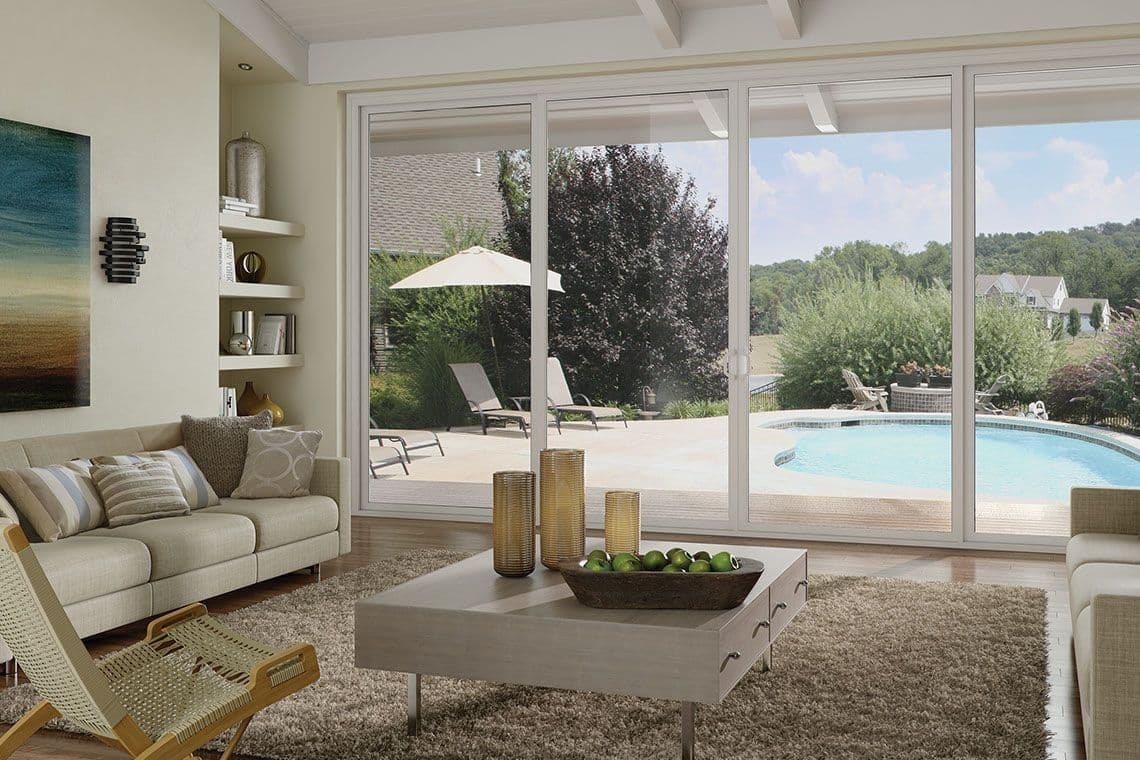
Replacement can improve operation, security, appearance, glass performance, energy efficiency, and the connection between indoor and outdoor living spaces.
Brand recognition alone should not determine which window goes into your home.
Homeowners should consider:
How long the manufacturer has been in business
- Warranty coverage
- Glass options
- Frame materials and construction
- Energy-performance ratings
- Available styles and colors
- Hardware quality
- Replacement parts
- Manufacturer support
- Glass-breakage coverage where applicable
- Labor coverage
- Long-term serviceability
The better question isn't necessarily, “What is the best window brand?”
It's:
“Which window and manufacturer are the best fit for my home, priorities, and budget?”
You can purchase an excellent window and still have a poor result if it isn't installed correctly.
Installation can directly affect operation, water management, air infiltration, appearance, and ultimately how the window performs over time.
Homeowners should ask what is included in the installation, who will actually perform the work, what installation standards are followed, how the home will be protected, what happens if unexpected conditions are discovered, and who is responsible if something goes wrong later.
Product matters.
But who stands behind the product and installation matters just as much.
One of the biggest misconceptions is that replacement windows are basically all the same.
They're not.
Two proposals can look very similar on paper and represent very different products and installation experiences.
There can be significant differences in frame materials, glass packages, hardware, warranties, installation methods, labor, waterproofing, service, and long-term performance.
Price absolutely matters, but it shouldn't be evaluated without understanding exactly what is included.
Look beyond the window itself.
The product is important, but homeowners should also understand who will be behind them throughout the project.
Ask:
- Who performs the final measurements?
- Who orders the windows?
- Who installs them?
- Are the installers employees or subcontractors?
- What exactly is included in installation?
- How is the home protected during installation?
- What warranty covers the product?
- What warranty covers the labor?
- Who handles manufacturer warranty claims?
- What happens if something goes wrong?
- Who will answer the phone after the project is complete?
Replacing windows and doors is a significant investment in the home. The company responsible for delivering that project matters just as much as the logo printed on the window.
Replacing windows isn't simply about picking a style and comparing prices.
The right solution depends on the home, existing openings, exposure, homeowner goals, climate, glass, architecture, budget, and installation method.
Two quotes can appear similar while offering very different products, warranties, installation scopes, and long-term ownership experiences.
The goal should not be to find the cheapest window.
The goal should be to understand what you're actually buying.
At Legendary, we're not simply selling windows and doors. We're helping homeowners make a decision they'll live with for decades.
Every home is different, and every homeowner has different priorities.
For one homeowner, the biggest issue may be heat. For another, it's noise. Someone else may want more natural light, easier operation, better curb appeal, or a large opening that completely changes how the family uses the home.
Our job is to listen first.
From consultation and design through final measure, planning, installation, and long-term care, our goal is to help homeowners understand their options and select the solution that makes sense for their home.
Because the best window isn't necessarily the most expensive window or the window with the biggest brand name.
It's the window that's right for your home, installed correctly, and backed by people who will be there after the project is complete.
Talk to an Entry Door Specialist in Orange County
Replacing your entry door is one of the highest-visibility changes you can make to a home. Getting the door selection and installation right the first time matters. If you're considering entry doors in Orange County and want to talk through options with someone who knows the product line and installation standards, contact us.

Visit Our Showroom
Mon-Fri: 9am - 5pm
Sat: 10am - 2pm